
Prof. Qing Li (IEEE Fellow)
The Hong Kong Polytechnic University, Hong Kong, China
Biography: Qing Li is a Chair Professor and Head of the Department of Computing, the Hong Kong Polytechnic University. He received his B.Eng. from Hunan University (Changsha), and M.Sc. and Ph.D. degrees from the University of Southern California (Los Angeles), all in computer science. His research interests include multi-modal data management, conceptual data modeling, social media, Web services, and e-learning systems. He has authored/co-authored over 500 publications in these areas, with over 74,500 citations and H-index of 108 (source: Google Scholars). He is actively involved in the research community, serving as an Editor-in-Chief of Computer & Education: X Reality (CEXR) by Elsevier; he has also served as an associate editor of IEEE Transactions on Artificial Intelligence (TAI), IEEE Transactions on Cognitive and Developmental Systems (TCDS), IEEE Transactions on Knowledge and Data Engineering (TKDE), ACM Transactions on Internet Technology (TOIT), Data Science and Engineering (DSE), and World Wide Web (WWW) Journal, in addition to being a Conference and Program Chair/Co-Chair of numerous major international conferences. He also sits/sat in the Steering Committees of DASFAA, ACM RecSys, IEEE U-MEDIA, WISE and ICWL. Prof. Li is a Fellow of IEEE and IET/IEE.
Speech Title:
Towards Multi-level Querying Methodology for
an Indoor Robot Smart Space
Speech Abstract: Smart
Space denotes dynamic, adaptive environments enhanced
with robotics and AI technologies. Examples include
smart homes/offices/cafes. By leveraging and integrating
Computer Vision, Natural Language Processing, AIoT, Data
Mining, Recommender Systems, and Sympathetic Computing,
Smart Space can help improve efficiency,
personalization, and user satisfactions with seamless
interactions. In this talk, we introduce PolyRAG, a
multi-level knowledge QA framework supporting
multi-level querying for an indoor robot application
system. Building on top of a naive RAG layer, we
construct a knowledge pyramid by adding a knowledge
graph layer and an ontology schema, so as to obtain a
good balance of recall and precision when applied to a
specific domain such as coffee robot interactions. We
employ cross-layer augmentation techniques for
comprehensive knowledge coverage and dynamic updates of
the Ontology scheme and instances. To ensure
compactness, we utilize cross-layer filtering methods
for knowledge condensation in KGs. An experimental
coffee robot prototype is constructed, and preliminary
empirical studies are conducted to show the
effectiveness of our PolyRAG supporting a waterfall
model for querying from ontology to KG to chunk-based
raw text.

Prof. Xiaoli Li (IEEE Fellow)
Singapore University of Technology and Design, Singapore
Biography:
Professor Xiaoli Li is Chair Professor and
Head of the Information Systems Technology and Design
(ISTD) Pillar at the Singapore University of Technology
and Design (SUTD). Prior to joining SUTD, he headed the
Machine Intellection Department at A*STAR, where he
established and led Singapore’s largest AI research
group consisting of more than 130 AI scientists. He is
also an Adjunct Full Professor at Nanyang Technological
University (NTU) and a Fellow of the Institute of
Electrical and Electronics Engineers (IEEE),
Asia-Pacific Artificial Intelligence Association (AAIA),
and PHM Society.
Professor Li is an internationally recognised
researcher in artificial intelligence, machine learning,
data mining, and bioinformatics, with a strong emphasis
on translating AI research into practical applications.
He has published over 400 peer-reviewed papers, received
more than 40,000 citations, and achieved an h-index of
96. His research contributions have earned more than ten
best paper awards, including the prestigious DASFAA 10+
Year Best Paper Award. He currently serves as an
Associate Editor of IEEE Transactions on Artificial
Intelligence and ACM Computing Surveys.
Beyond his academic achievements, Professor Li
has extensive experience in leading large-scale,
industry-driven AI research and innovation. He has
established and directed several joint research
laboratories and spearheaded strategic R&D
collaborations with leading international organisations
across aerospace, telecommunications, insurance,
professional services, and other industries. His work
bridges fundamental AI research and real-world
deployment, advancing intelligent solutions for complex
industrial and societal challenges.
His contributions have received international
recognition, including being ranked among the world's
top 2% of scientists and being named a Clarivate Highly
Cited Researcher.
For more information, please visit
Professor
Xiaoli Li's SUTD profile.
Speech Title:
Advancing Design AI: From Industrial Sensor Intelligence
to Robotics
Speech Abstract:
Artificial intelligence (AI) delivers transformative
value when it moves beyond algorithmic advances to
address complex real-world challenges. Achieving this
requires intelligent systems that can learn from
heterogeneous data, support human decision-making, adapt
to dynamic environments, and operate reliably under
practical constraints. This keynote presents an
integrated perspective on Design AI, highlighting how
advances in machine learning can be translated into
intelligent, trustworthy, and deployable solutions
across education, industry, and robotics.
The keynote begins with AI-enabled education, exploring
how intelligent techniques can enhance programming
education through automated assessment, personalised
feedback, and adaptive learning support. By analysing
students’ code and programming behaviours, AI systems
can identify misconceptions, diagnose learning
difficulties, and provide timely, actionable feedback,
while enabling instructors to support larger and more
diverse student cohorts. The rapid emergence of
generative AI introduces new opportunities and
challenges, particularly in assessing authentic
learning, distinguishing human-written from AI-generated
code, and rethinking assessment strategies in
AI-assisted educational environments.
The second part focuses on AI-driven industrial
intelligence, where modern machines and cyber-physical
systems continuously generate large volumes of complex,
multivariate sensor data. Learning robust and
informative representations from these often noisy,
heterogeneous, and sparsely labelled time-series data is
essential for applications such as anomaly detection,
equipment health monitoring, remaining useful life
prediction, and predictive maintenance. Drawing on
selected industrial collaborations and deployments, the
keynote illustrates how AI can transform raw sensor
streams into actionable intelligence, improving
operational reliability, reducing unplanned downtime,
and enabling timely decision-making. Particular
attention is given to developing efficient and scalable
AI solutions that can operate in real time, including on
resource-constrained edge devices.
The final part extends these foundations to embodied
intelligence and robotics, where AI must move beyond
interpreting data to perceiving, reasoning, adapting,
and acting in the physical world. Integrating visual
perception, temporal sensor information, environmental
understanding, and physical interaction introduces new
challenges in robustness, autonomy, and adaptability.
Research examples spanning underwater mapping,
autonomous ship-hull inspection, intelligent navigation,
and reconfigurable robotics demonstrate how AI-enabled
robotic systems can operate effectively in complex,
uncertain, and dynamic environments.
By connecting these three domains through a unified
Design AI perspective, the keynote emphasises the
importance of integrating data-driven learning, and
real-world deployment. The central message is that the
future of impactful AI lies not merely in developing
increasingly powerful models, but in designing
intelligent systems that are reliable, adaptive,
trustworthy, and capable of delivering tangible benefits
to people, industries, and society.

Assistant Professor Sinan Chen
Kobe University, Japan
Biography:
Sinan Chen received his M.S. degree in
System Informatics and Ph.D. degree in Computational
Science from Kobe University, Japan, in 2019 and 2021,
respectively. He served as a JSPS Postdoctoral Research
Fellow at Kobe University in 2022 and is currently an
Assistant Professor at the Center for Mathematical and
Data Sciences, Kobe University.
His research focuses on human-centered AI,
multimodal sensing, computer vision, and behavioral
intelligence, with particular interests in temporal
behavior modeling, individualized change detection, and
context-aware intelligent systems. His recent work
covers facial dynamics, hand and finger movements, body
motion, gait, and everyday activity sensing, with
applications in healthcare, aging, smart environments,
interactive systems, and digital technologies for
education.
He is a member of IEEE, ACM, Sigma Xi, CAAI, CCF,
IEICE, and IEEJ.
Speech Title:
Beyond Recognition: Context-Aware Multimodal
Intelligence for Real-World Human Behavior Understanding
Speech Abstract: Recent advances in computer
vision and multimodal learning have enabled increasingly
accurate recognition of faces, gestures, poses,
activities, and other observable human behaviors.
However, recognizing what a person is doing is not
necessarily equivalent to understanding the meaning of
that behavior. Real-world human behavior is highly
context-dependent, temporally evolving, and
heterogeneous across individuals, making conventional
task-specific recognition models insufficient for many
human-centered applications.
In this invited talk, I will discuss our recent efforts
toward context-aware multimodal intelligence for
understanding human behavior in real-world environments.
Using examples from facial dynamics, hand and finger
movements, body motion, gait, and everyday activity
sensing, I will illustrate how heterogeneous behavioral
signals can be represented and integrated beyond
single-modality or single-task recognition. Particular
attention will be given to three challenges: modeling
temporal behavioral dynamics, incorporating contextual
information, and distinguishing meaningful within-person
changes from normal inter-individual variability.
I will further discuss how these ideas point toward a
broader research direction of multimodal behavioral
intelligence, in which sensing, multimedia
representation, temporal modeling, and adaptive AI are
jointly designed to move from recognizing isolated
observations toward understanding individuals over time.
This perspective may provide a foundation for more
personalized, reliable, and human-centered intelligent
systems across healthcare, smart environments,
human–computer interaction, and other real-world
applications.
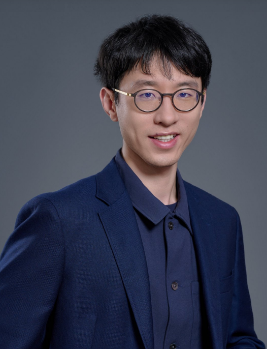
Assistant Professor Tongxin Li
The Chinese University of Hong Kong, China
Biography:
Dr. Tongxin Li is a tenure-track
Assistant Professor in the School of Data Science at The
Chinese University of Hong Kong, Shenzhen. He received
his Ph.D. in Computing and Mathematical Sciences from
the California Institute of Technology in 2022. Prior to
that, he obtained dual bachelor's degrees in Mathematics
and Information Engineering, as well as a Master of
Philosophy degree, from The Chinese University of Hong
Kong.
His research focuses on interdisciplinary topics
spanning machine learning, control, and optimization,
with applications to power systems and sustainable
low-carbon clean energy. Specifically, he is interested
in developing trustworthy artificial intelligence to
enhance the sustainability, robustness, scalability,
privacy, and resilience of smart grids. He has been
invited to present at numerous international conferences
and has published in top-tier journals and conferences.
Professor Li also has extensive industry–academia
collaboration experience. He interned twice as an
Applied Scientist at AWS Cloud Security. He has
participated in multiple power system optimization and
design projects in collaboration with the National
Renewable Energy Laboratory, Pasadena Water and Power,
and Caltech Facilities. His smart grid project received
the 2021 Impact Grant from the Resnick Sustainability
Institute.


